



In the IDF, there are 626 Ethiopian prisoners, constituting 15% of prisoners in military prisons | Acting Chair of the Committee MK Tamnu: “The IDF must continue to recruit Ethiopian immigrants for permanent service and officer tracks until we see the data align with the appropriate representation as stipulated by law.”
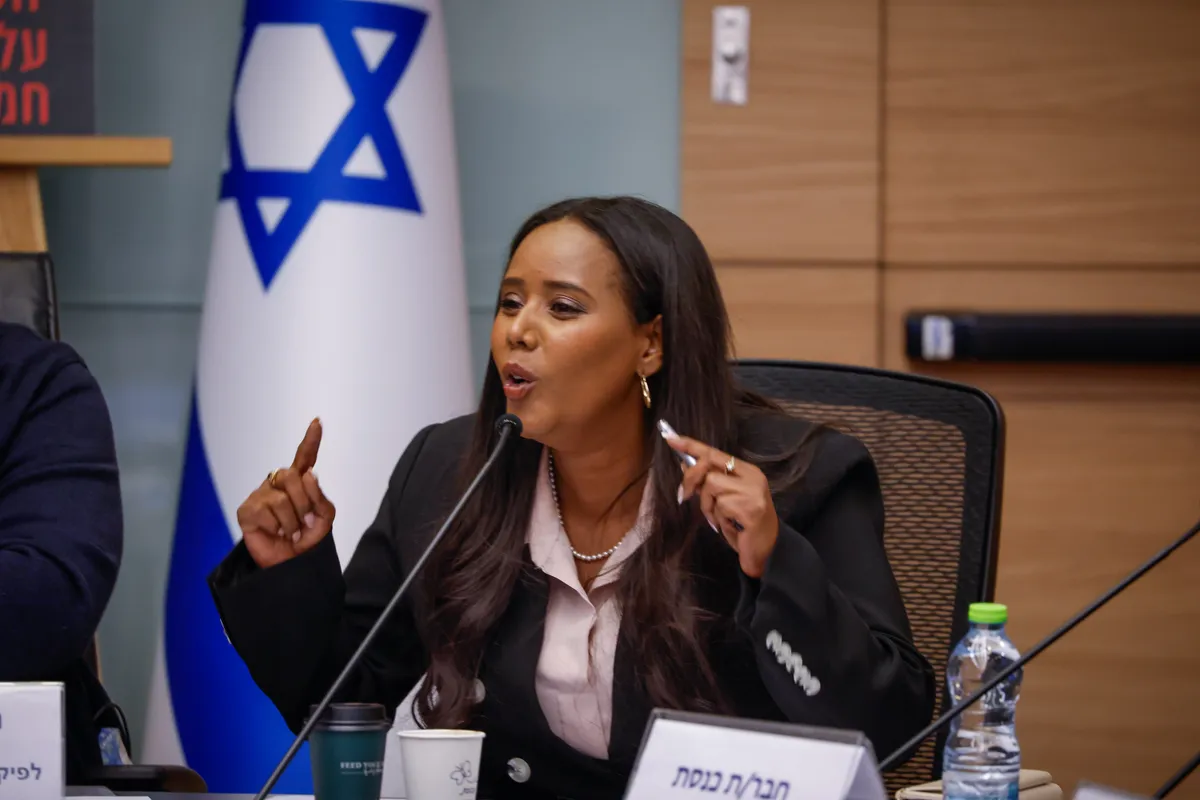
The Special Committee for Supervising Barrier Removal Processes, headed by Acting Committee Chair MK Pnina Tamnu (Blue and White – The National Camp), convened today (Monday) for a discussion on Ethiopian soldiers in the IDF and the security establishment – a status update and implementation of previous decisions.
MK Pnina Tamnu, Chair of the Special Committee for Supervising Barrier Removal Processes:
“The IDF must continue to recruit Ethiopian immigrants for permanent service and officer tracks until we see the data align with the appropriate representation as stipulated by law. Soldiers who experienced racism were forbidden from appearing before the committee, and I regret this. In the last decade, significant progress has been made in integrating Ethiopian immigrants into the security systems. Until 2015, there were separate recruitment tracks for Ethiopian immigrants, and many in the community refused to cooperate with this approach. The intention of the security establishment was good, but the actual implementation was incorrect. Until the change was made in the security branches, we saw many from the Ethiopian community enlisting in secondary and non-central roles within the security establishment. I received a report of racist calls towards Ethiopian combat soldiers. That same Ethiopian soldier who experienced racism threatened his friend with violence, and the commander reprimanded both soldiers. I do not intend to remain silent on this incident, and if necessary, I will take this story all the way to the Chief of Staff. I receive many cases of racism towards Ethiopian immigrants in various security systems, and we must ensure these cases are dealt with firmly. In general, the handling of racism in the IDF works very well, and this needs to permeate all security bodies. Another issue is the utilization of rights for Ethiopian immigrants within the security service. Parents of Ethiopian soldiers do not know or are not aware of their children’s rights when they are harmed, and the information is not sufficiently accessible to the community. Everyone in the IDF must know who to contact regarding any manifestations of racism within the IDF. Discharged Ethiopian soldiers sometimes need small loans to start their lives, but the Ministry of Aliyah and Integration does not have a small fund for providing loans to Ethiopian immigrants. We are on the verge of budget cuts to programs of the Ministry of Education for the integration of Ethiopian immigrants. Entire sectors of the country are not experiencing cuts, but the meager budget for the Ethiopian community must not be cut. It cannot be that the Rehabilitation Department will ignore wounded members of the Ethiopian community.
Lt. Col. Shosh Gaziel, Manpower Directorate, IDF: “The IDF’s systemic program for the integration of Ethiopian immigrants deals with breaking down barriers, accessibility, and advancement. We begin the process of accompanying Ethiopian immigrants’ recruitment already from 12th grade when they are candidates for security service. According to our data, there are currently 5,069 Ethiopian soldiers serving in the IDF, of whom 844 are career soldiers, 369 are officers, and the rest are non-commissioned officers. Among Ethiopian recruits between July 25 and May 26, 30% enlisted as combat soldiers, 9% serve in technical roles, 18% in administrative roles, while the overall percentage of recruits is 10%. In the IDF, there are 626 Ethiopian prisoners, constituting 15% of prisoners in military prisons. Among service deficiencies, absentees, and deserters, 29% are Ethiopian, while the figure among the general population stands at 10%. We have a 13% dropout rate among Ethiopian sector recruits, which aligns with the overall IDF dropout rate of 11%. Most IDF dropouts occur in the first six months after enlistment. We conduct commander training at all levels and in all service circles.”
Esther, mother of a discharged soldier: “My son has been in trauma since his discharge from Golani. We in the family do not have the appropriate tools to help him. I contacted social services to report on my son, and they began an investigation of the family unit instead of directly helping my son. We in the Ethiopian immigrant sector do not know how to properly cope with post-traumatic stress disorder after discharge from the IDF, and the information is not sufficiently accessible to us.”
Lt. Col. Uriel Zamir, Head of Regular Service Recruitment, Meitav, IDF: “We are very considerate of Ethiopian immigrants during the initial testing phase as part of the ‘Tzav Rishon’ (first draft), including conducting tests in Amharic for those who need it. Each year, approximately 2,547 Ethiopian immigrants enlist in the IDF out of about 70-80 thousand recruits. Every six weeks, a dedicated forum convenes with the purpose of assisting Ethiopian immigrants serving in the IDF. We allow transfers between roles even after enlistment, which does not happen in other sectors of the IDF. This year, 21 Ethiopian soldiers were accepted into a dedicated officer track out of approximately 350 allocations. I summon about 450 people per day for ‘Yom Sayarot’ (recruitment day), of whom about 120 are Ethiopian immigrants. We summon all eligible Ethiopian immigrants for psychometric tests again. In 2025, 199 Ethiopian soldiers enlisted for combat roles, 55 for intelligence, 32 for mentoring and instruction, 42 for the Air Force, 23 for the Argaman project in the Commando Brigade, 8 for IDF Spokesperson, 4 for Galatz, 9 for the Navy, 5 for Military Police, and 10 for C4I. Additionally, in 2026, 18 female soldiers are expected to enlist as psychometric diagnosticians.”
Superintendent Eli Sanbato, Head of the Ethiopian Immigrant Community Department, Israel Police: “We have over 3.5% of police officers from the Ethiopian sector – a figure that represents a larger percentage relative to the representation of the Ethiopian public in Israel. We currently have 111 officers across all ranks of the Israel Police, constituting 1.7% of all police officers. 92% of all serving police officers who are Ethiopian immigrants are in operational roles.”
Superintendent Keren Malki, Head of Non-Commissioned Officers and Mandatory Service in the Border Police: “In 2022, we had 112 Ethiopian immigrants serving, and in 2026, there are already 226 Ethiopian immigrants serving. There is high demand for service in the Border Police, and we are very proud of the extensive recruitment we have. In 2026, there are 137 career soldiers, including 22 officers.”
Asmara Akale, Head of the Staff for the Integration of Ethiopian Immigrants, Prime Minister’s Office: “The budget allocated to the Ministry of Education for the integration of Ethiopian immigrants amounts to 102 million shekels in the current biennial budget.” Ronit, Rehabilitation Department: “We are in the process of recruiting people in a wide variety of languages, and they will be able to provide unique assistance to affected families who are foreign language speakers.”
Yitzhak Ohana, Deputy Director General, Ministry of Aliyah and Integration: “According to current data, we provide budgetary support to 1,100 Ethiopian soldiers serving in the IDF. This support is automatically provided to Ethiopian soldiers serving in the IDF who immigrated to Israel in the last 15 years. Beyond that, we provide grants to eligible lone soldiers from all communities. We make all information accessible at discharge conferences. We work with the database of discharged Ethiopian immigrants and ensure that each person receives the necessary assistance and guidance after discharge.”
Dalia Yanko, Head of the Security-Social Department, Ministry of Defense: “I am on my way to a family day for recruits from the Ethiopian community, and their families are very excited about this day. Any manifestation of racism in the IDF must be dealt with in the most effective way, and this applies to all manifestations of racism towards all vulnerable populations in the IDF. Commander training must be provided to deal with manifestations of racism within the military system. Commanders change annually, and every commander in the IDF must be aware and conscious of manifestations of racism within their unit. The IDF provides budgets for combating racism, and it is part of the IDF’s overall program. Pre-military preparatory programs are funded by the Ministry of Defense and the Ministry of Settlement and National Missions, and they must also deal with preventing racism, among other things.”
Acting Chair of the Committee MK Pnina Tamnu summarized the discussion:
“I request that all security bodies provide us with complete data in writing. From all the data collected, we will ask the Knesset’s Research and Information Center to prepare a structured and consolidated document for us to understand the trends in depth. We want to see a macro-level change in the recruitment of Ethiopian immigrants to all security bodies. I request to receive the IDF’s detailed plan for the integration of Ethiopian immigrants into the army. I am very concerned about the number of Ethiopian prisoners and ask the IDF to examine this in depth. The committee requests to promote equality within the IDF and make access to reporting in cases of racism more accessible. The committee requests the Prime Minister’s Office to provide data on the budget allocated for preparation for the IDF, both in youth movements and in pre-military preparatory programs. I request all security bodies to promote officer positions for members of the Ethiopian community. The committee directs the Ministry of Aliyah and Integration to examine the establishment of a loan assistance fund for discharged immigrant soldiers. The committee requests the establishment of small programs to make the rights of discharged soldiers accessible in both Amharic and Hebrew.”