



By Margot Dudkevitch • July 1, 2026
Jerusalem, 1 July, 2026 (TPS-IL) —
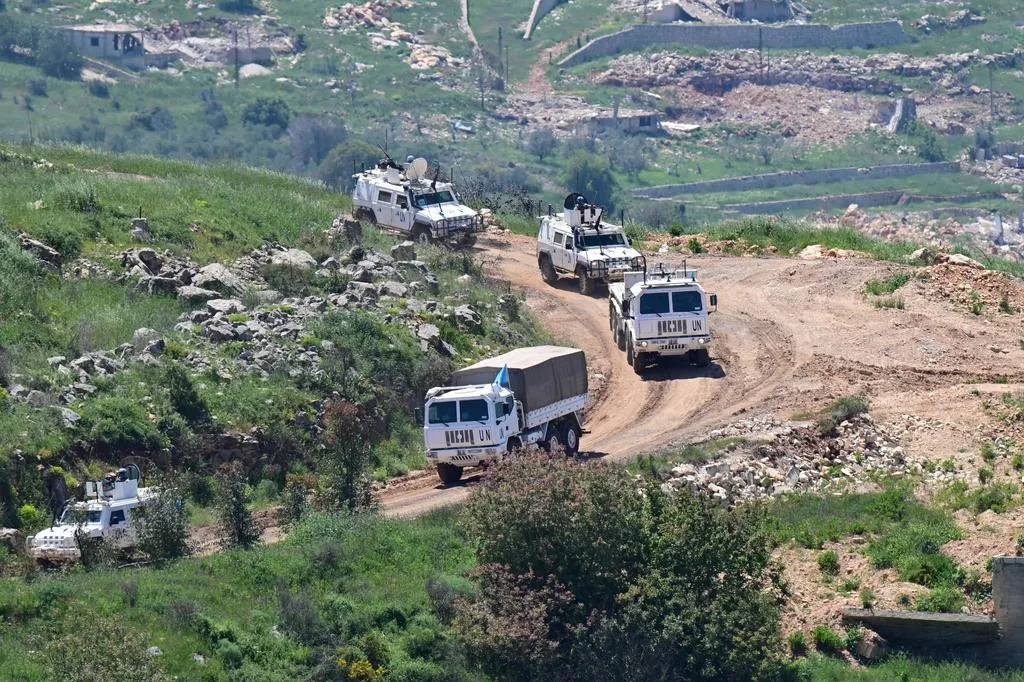
The recent signing of the trilateral agreement between Israel and Lebanon under the auspices of the United States is the best agreement Israel could get as its finally changing the order, Sarit Zehavi the President and founder of the Alma Research and Education Center told TPS.
“It was the right thing to do,” she says. Whereas past agreements expected Israel to withdraw first, now its up to Lebanon to disarm Hezbollah and only then will Israel pull out of south Lebanon. It is a framework for peace between Israel and Lebanon and not a ceasefire. It is all about the implementation and its up to Lebanon to prove itself she says. There are no guarantees however the agreement will hold, she warns.
Currently Hezbollah is taking advantage of the situation to rebuild its presence both militarily and civically in South Lebanon. A report recently published by Alma notes the terrorist organization is deploying ‘fresh personnel’ in the Nabbatiyah area considered a Hezbollah operational command center, as well as along the Ali al-Taher Range. This does not only include combat operatives but also logistic personnel and IED and drone operators. Hezbollah also operates on the civilian front, dispatching operatives to villages where they deal with local residents, identifying assets and infrastructure to facilitate Hezbollah’s deployment on the ground.
In accordance with the current agreement, Zehavi says the IDF is no longer initiating attacks but just removing threats and destroying Hezbollah weapons caches, strongholds and attack tunnels as well as terrorists who pose a direct threat to IDF troops there.
Iran is totally willing to use Hezbollah as a bargaining card in the talks with the United States. Zehavi predicts that once the sides begin discussing Iran’s nuclear program, we may witness an escalation inside Lebanon, in an attempt to shift the focus from Iran’s nuclear program. While Hezbollah is weakened due to Israel’s actions, Iran will continue to fund it. “As long as the current Iranian regime remains intact and is alive and kicking, Hezbollah will remain,” she says.
“Until today the Lebanese government focused on issuing statements and less action on the ground.” The Lebanese President Joseph Aoun and Prime Minister Nawaf Salam are facing threats because of the agreement, but if they continue to be afraid, they will lose their country Zehavi warns.
Inside Syria the IDF continues to maintain a presence in security zones in order to ensure that nothing threatens Israel’s northern border says Zehavi.
It is unclear why US President Donald Trump recently decided to ask Syria President Ahmed al-Sharaa to fight Hezbollah inside Lebanon claiming he thinks they will do a better job than Israel she says. “We need to ask ourselves who is Ahmed al-Sharaa. It is clear by monitoring the current regime in Syria he still upholds a Jihadist ideology and is also being bolstered by Turkey’s President Recep Tayipp Erdogan.”
“Trump should be aware that al-Sharaa does not fight according to international law, he is far more brutal,” she says. One only has to recall the attacks by Syrian army forces on the minority Druse community in Syria, who were slaughtered and women and children kidnapped and raped. “Is this what Trump wants in Lebanon?”
Another cause for concern is Turkey, who strives to strengthen its hold in the Middle East, and is heavily involved in Syria’s defense establishment, supplying military equipment and training Syrian troops. According to reports, both countries share a similar objective which is to contain Israel’s military action in the region.
Israel will not give up its presence on the Hermon Ridge she says, which allows it a strategic outlook to monitor both Syria and Lebanon and collect intelligence. After October 7, 2023 Israel will not compromise on its security. The IDF she says realizes that it has to remain on the other side of the border as long as there is no one friendly there.
On a personal note, Zehavi who resides in the North, said Israeli residents were constantly disappointed by fake agreements drawn up in the Past. The last week has been the calmest yet she says. For three years, residents living on Israel’s northern border have come under constant threats, attempted terrorist infiltrations, bombings, rocket attacks, seconds to rush to bomb shelters and safe rooms. “We want to build our future here and thrive, but in order to do that we need to be sure that families, women and children will not be threatened with rape and murder,” she says.